
In the imagination of most of us, American army played the biggest role in second world war (WWII) if not in first one (WWI). Looking at facts and figures however, this is not correct:
– time wise America engaged very late in WWI and played a small role on the battlefields in Europe
– likewise America waited that Germany declared the war to engage in WWII and although it played the first role on the Western front it was a secondary one compared to the Eastern front.
World War One: American played a minor military role, although its psycholical one was certainly important
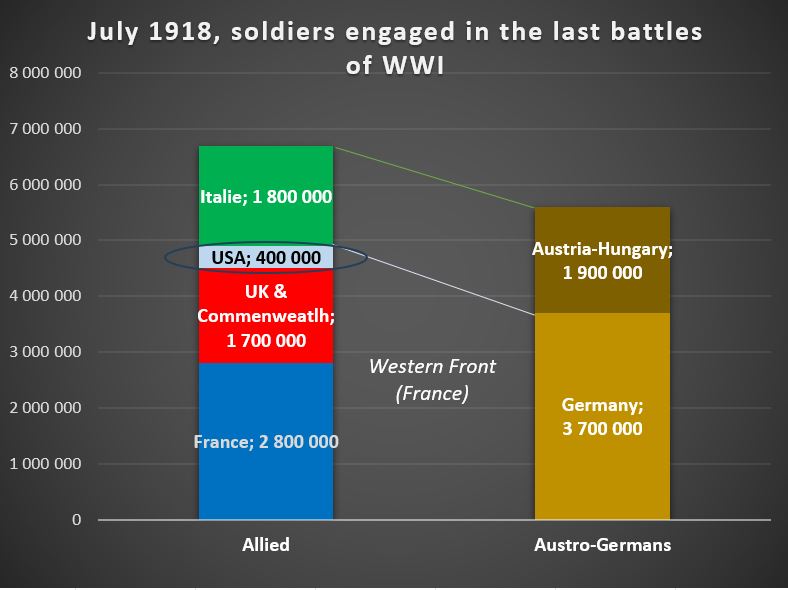
Let’s start by deep diving a bit at WWI. As a reminder, USA declared war to Germany in April 20217 and had virtually no land army at this stage. It took around one year to have the first operational units in France. Yet during the massive German offensives of spring 1918, after Russia exited the war which allowed the Germans to have all their army on the Western front only, USA had barely a couple of divisions to engage, when the French had more than 100 and the Brits around 50.
It is alos interesting to remind that the American soldiers were equipped by the French industry (planes Spad, tanks Renault, guns…) and trained by the French army. So also on the industrial side the role of the USA was very limited
Conclusion for world war one:
1/ France had the clear first role in defeating the Germans, followed by UK.
2/ USA represented only a bit more than 5% of total allied forces engaged in the final decisive battles.
3/ Worth reminding the important role that the Italians played against the Austro-Hungarians
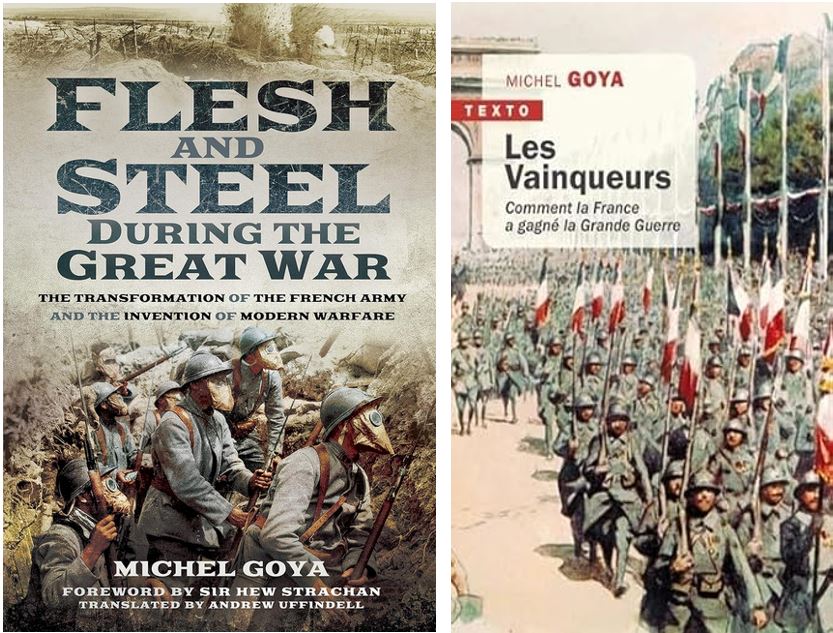
For those willing to deep dive I strongly recommend the reading of the below books from the historian and former army officer Michel Goya, the second one not existing in English sadly!
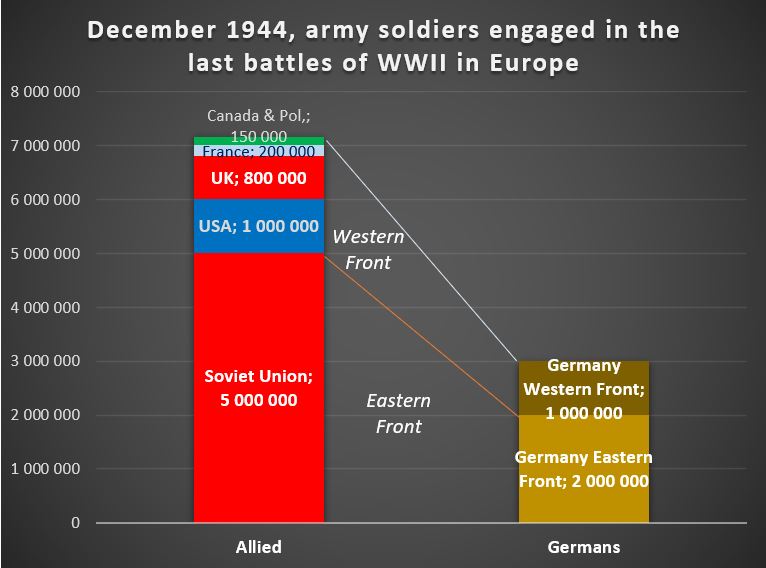
World War 2: in December 1944 the American army in Europe at its peak barely reached half the size of the French army in 1918 and 1940 with 40 to 50 divisions and was at best a quarter of the Soviet one.
Although it is impossible to have exact numbers, the graph below shows the order of magnitude of the ground forces – excluding air and navy – present in Europe at the end of 1944 – early 1945.
I could identify 16 infantry divisions (1st, 2nd, 4th, 5th, 9th, 26th, 28th, 30th, 35th, 75th, 80th, 83rd, 87th, 99th and 106th), 7 Armored Divisions (2nd, 3rd, 4th, 5th, 6th, 7th and 9th) and 3 Airborne Divisions (82nd, 101st and 17th lately arrived).
Considering an average 15,000 soldiers per division this would give only 26 divisions x 15,000 = 390,000 soldiers. This is probably correct if we consider only contact troops. Hence rounded up to 1 million to consider engineers, logistic etc.
Yet 26 divsions is only a quarter of what the French army was in 1918 and 1940.
And 7 armored divisions « only » is to be compared with the 30+ that the Germans had at the peak in 1943, even if their equipment and staffing was in general far below the norm.
Soviet-Union had more than 200 divisions of all type, yet with lower staffing. Even though American plus British armies were no match with the Soviet one with its huge experience on the Eastern Front.
Beside roles on the ground it is worth mentioning the super important one played by the Americans – and the Britons once again – on the sea and in the air.
Also from industrial standpoint the Americans jumped into the economy of war as soon as 1940 after the defeat of France, unlike the Germans who were still believing into a decisive victory and really made the jump in 1943.
Soviet-Union, yet again against common thinking, was in a war economy since before 1939 and would have beaten the Germans without the help of the American industry. Keep in mind Soviets had 20,000 tanks when the Germans attacked them in 1941 with only 3000. At some point quality is not all, quantity ends up making the difference.
Conclusion for WWII:
– Soviet Army played without any doubt the first role in defeating Germany.
– American army played an important second role, similar to what the Brits did, which tends to be unfairly shadowed by their American colleagues.
– French, Canadians and Polish played a minor role, similar to the one of the Americans in WWI.
2026: and if American army in Europe was not a tiger of paper but was just… a much smaller tiger than what you thought?
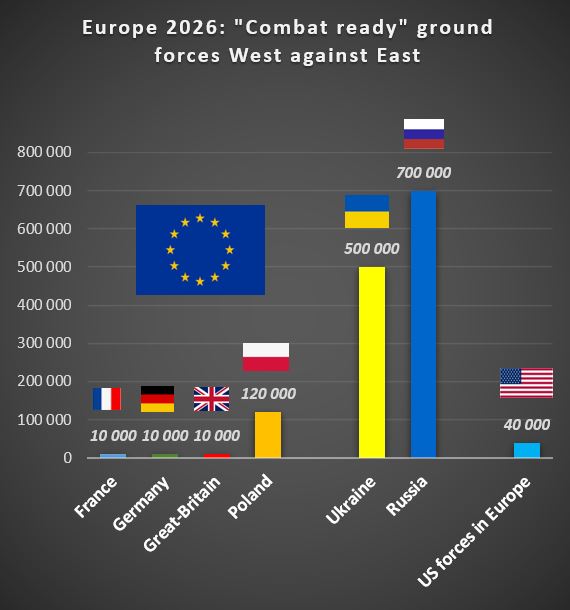
Allow me to recycle the graph made for a previous article to visualize how small are American forces in Europe compared to Russia and even to Ukraine.
There are approximately 100,000 American soldiers in Europe. Only half of British, German, Polish or French armies. Yet considering the super low % of actually fighting forces vs support in US army, the estimate of 40,000 combat U ready troops in Europe is already super optimistic.
For comparison France has a total army of 200,000 including navy and air force. It has 77,000 in the army itself, out of which 20,000 max combat ready, which leads to being able to actually deploy 10,000 considering lack of equipment, ammunitions etc.
To make my point even more clear, below drawing shall make it clear that if it is not in paper, American tiger is only a … small cat! (thank you ChatGPT)
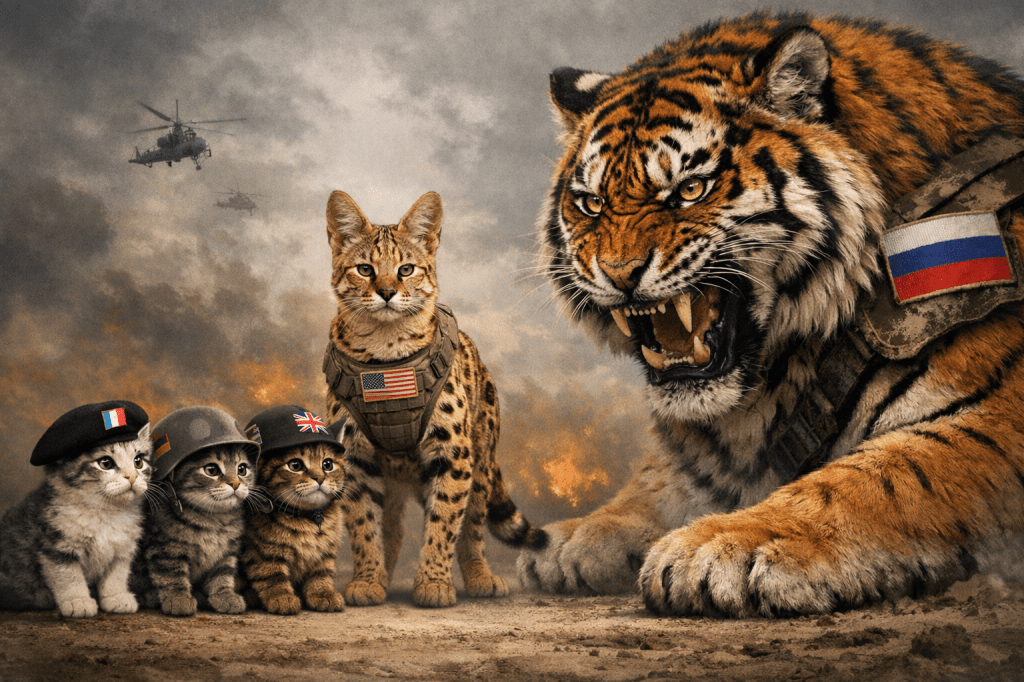
Conclusion for present day: USA in Europe is only a small to medium size cat. And anyway we’re not even sure in which camp he would engage, if in any!
At least what’s sure is that Western Europe armies are even smaller cats, only the shadow of what they’ve been 100 and 80 years ago!
Return to main page: France, Europe Réagir
 France, Europe Réagir
Laisser un commentaire